Introduction
Large-scale solar mounting projects require reliable structures to support photovoltaic (PV) panels across extensive installation areas. The structural design directly affects the stability, load-bearing capacity, installation efficiency, and long-term performance of a solar mounting system.
Unlike small-scale installations, utility-scale solar projects often involve complex site conditions, large panel layouts, and varying environmental loads. Therefore, proper structural design is essential to ensure that the mounting system provides reliable support throughout its service life.
1. Ensuring Structural Stability
Structural stability is one of the most important considerations in large-scale solar mounting projects. Solar mounting structures must securely support PV modules while maintaining their designed configuration under outdoor conditions.
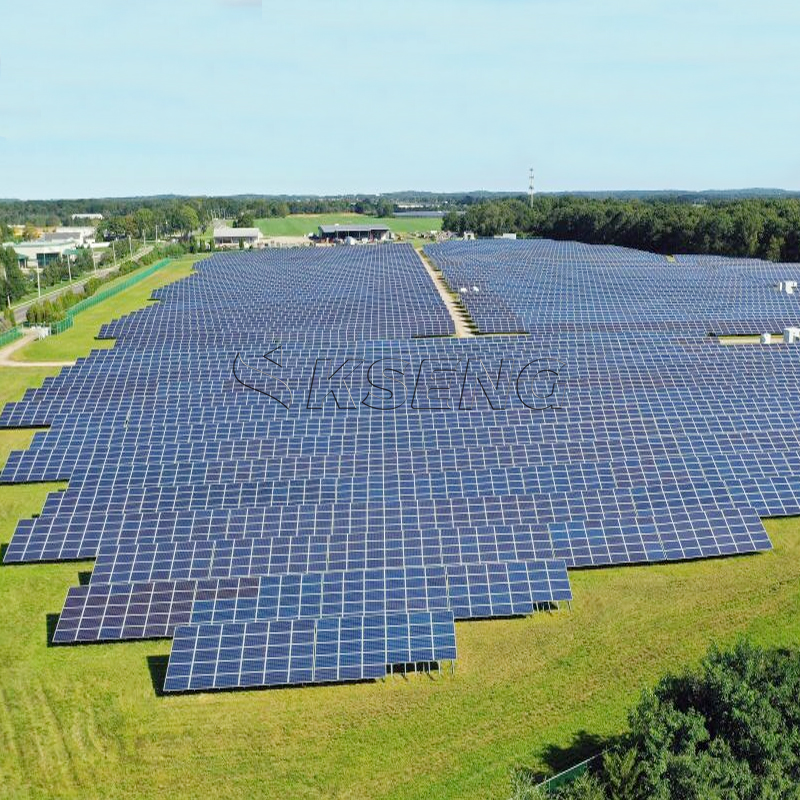 A well-designed structure considers the arrangement of support members, connection points, foundation configuration, and overall structural dimensions. Proper coordination between these elements helps distribute loads effectively and reduces the risk of structural deformation.
2. Improving Load-Bearing Capacity
Solar mounting structures must withstand several types of loads, including the weight of PV modules, wind pressure, snow accumulation, and other environmental forces.
Structural design determines how these loads are transferred through the mounting frame to the foundations. Appropriate material selection, member dimensions, connection design, and structural calculations help ensure that the system meets the load requirements of the project.
For large-scale solar installations, load-bearing performance should be evaluated according to local environmental conditions and applicable design standards.
3. Selecting Suitable Materials
Material selection plays an important role in the strength, corrosion resistance, and durability of solar mounting structures.
Common materials include aluminum alloy, carbon steel, hot-dip galvanized steel, and Zn-Al-Mg coated steel. Each material offers different mechanical properties, corrosion resistance, and application advantages.
For example, aluminum alloy offers a favorable strength-to-weight ratio, while carbon steel provides good structural strength and is suitable for load-bearing applications. Hot-dip galvanized steel offers structural strength and corrosion protection, while Zn-Al-Mg coated steel provides enhanced corrosion resistance for outdoor applications.
The appropriate material should be selected according to project requirements, environmental exposure, and structural design considerations.
4. Adapting to Site and Environmental Conditions
Large-scale solar projects may be developed on different types of terrain and under varying environmental conditions. Factors such as soil properties, ground slope, wind speed, and snow load can influence mounting structure design.
A suitable structural design should account for these site-specific conditions. Foundation selection, support height, installation angle, and structural configuration should be evaluated to ensure compatibility with the project location.
Proper site adaptation helps improve overall stability and reduces potential structural risks during long-term operation.
5. Improving Installation Efficiency
A practical structural design can simplify the installation process of large-scale solar mounting systems.
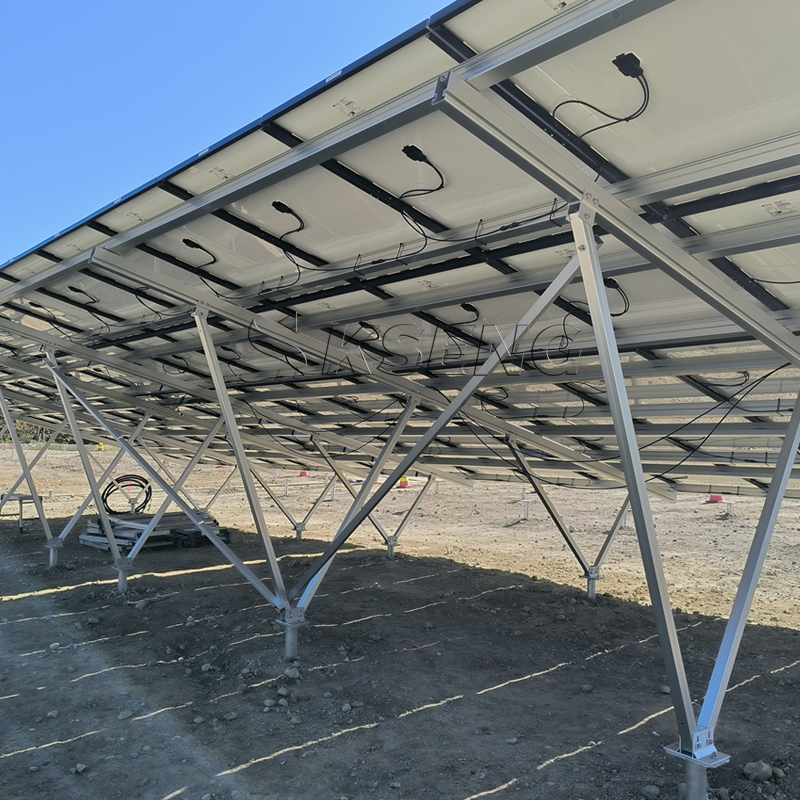 Standardized components, suitable connection methods, and well-planned structural configurations can reduce unnecessary assembly work and improve installation efficiency. Proper coordination between structural components also helps minimize fitting difficulties during on-site construction.
For projects involving extensive mounting structures, installation efficiency can influence construction schedules and overall project costs.
6. Supporting Long-Term Durability
Solar mounting systems are designed for long-term outdoor use. Their structural performance depends not only on initial strength but also on resistance to environmental exposure and material deterioration.
A reliable design should consider corrosion protection, connection durability, material compatibility, and potential maintenance requirements. Appropriate surface treatments and suitable structural configurations help maintain the performance of mounting systems over time.
Conclusion
Structural design is a fundamental factor in the success of large-scale solar mounting projects. It influences structural stability, load-bearing capacity, material selection, environmental adaptability, installation efficiency, and long-term durability.
By combining appropriate materials with practical structural configurations and project-specific engineering considerations, solar mounting systems can provide reliable support for large-scale photovoltaic installations.
Kseng offers solar mounting systems featuring practical structural designs, reliable support performance, and good outdoor durability for photovoltaic installations. With attention to product design and manufacturing, Kseng provides mounting structure options for different solar project requirements.
FAQs
1. Why is structural design important for large-scale solar mounting projects?
Structural design ensures that solar mounting systems provide adequate stability, load-bearing capacity, and durability. It also helps improve installation efficiency and adapt structures to specific project conditions.
2. What factors affect the structural design of solar mounting systems?
Key factors include material properties, wind loads, snow loads, soil conditions, foundation types, panel dimensions, and installation requirements.
3. How does material selection affect solar mounting structure performance?
Material selection influences structural strength, weight, corrosion resistance, durability, and overall system performance. The appropriate material depends on project requirements and environmental conditions.
4. How do wind loads affect solar mounting structure design?
Wind loads influence structural dimensions, support arrangements, connection strength, and foundation requirements. Proper structural calculations help ensure that the mounting system can withstand local wind conditions.
5. Why should snow loads be considered in solar mounting system design?
Snow accumulation adds weight to solar panels and mounting structures. Considering local snow conditions helps determine appropriate structural dimensions and load-bearing capacity.
6. How can solar mounting structures improve long-term outdoor durability?
Suitable materials, effective corrosion protection, reliable connections, and appropriate structural configurations help reduce environmental deterioration and maintain long-term performance.






 IPv6 네트워크 지원